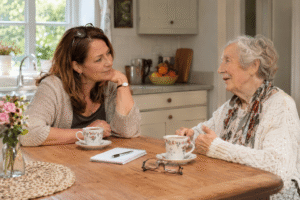
If you are looking for what to do after a dementia diagnosis or wondering about the first steps after an Alzheimer’s diagnosis, remember that you do not need to handle everything at once. The first few weeks are a good time to gather information, ask the doctor for a written summary, make the home safer, and begin discussing future care needs. The 90-day framework below offers a suggested pace for these tasks. It is not a medical timeline, and every family’s situation will be different.
This newly diagnosed dementia checklist is for spouses and adult children who are helping a loved one adjust to a diagnosis. At Angel’s Haven Care, we understand that families may have many questions during this time. The steps below cover practical matters, with medical and legal information supported by published sources. Focus on the tasks that apply to your family’s circumstances.
The 90 days at a glance:
- Week 1: Give yourself time to process the news, write down questions, and request a written summary from the doctor.
- Weeks 2 to 4: Review home safety and begin conversations about driving, finances, and medications.
- Weeks 4 to 8: Discuss legal and financial arrangements and identify people who can help with care.
- Weeks 8 to 12: Research available care options and consider what support your loved one may need.
The First Week: Take a Breath and Gather Information
Hearing a diagnosis is a lot to take in. Nothing in the first week has to be decided. The goal is to understand what you were told and to know who to call with questions.
☐ Give yourselves a day or two to absorb the news before making big decisions.
☐ Write down what the doctor said while it is fresh, including words you did not understand.
☐ Let one or two trusted people know, so you are not carrying this alone.
☐ Include your loved one in the conversation. Ask what they want to know and who they want involved.
☐ Save the phone number of the doctor’s office and ask who to call with follow-up questions.
☐ Consider calling the Alzheimer’s Association 24/7 Helpline at (800) 272-3900, which it describes as a free service for people living with dementia and their caregivers.
The Alzheimer’s Association page on life after diagnosis is a good place to read at your own pace.
Questions to Ask the Doctor
Bring a notebook, or ask someone to come along and take notes. If you only have time for a few, start at the top. These questions to ask the doctor about a dementia diagnosis are a starting point, not a complete list:
☐ What type of dementia is it, and how did you reach this diagnosis?
☐ What stage is it, and what changes should we expect over the next months?
☐ Which tests, if any, are still needed?
☐ Are there medications or other treatments that may help, and what are the side effects?
☐ Are there any current medications that could be affecting memory or thinking?
☐ Is it safe for my loved one to keep driving, managing money, or living alone?
☐ Will you manage care going forward, or should we see a specialist or memory clinic?
☐ When is the next appointment, and what changes should we call about sooner?
☐ Are there clinical trials or local support programs we should know about?
Getting a Clear Written Summary
Before you leave the office, or by phone or the patient portal soon after, ask for a short written summary: the exact diagnosis, the date, current medications, and the plan for follow-up. Keep it in a folder with a medication list and insurance cards, so you can share it with other doctors and family members.
☐ Ask for the diagnosis, stage, medications, and follow-up plan in writing.
☐ Start one folder, paper or digital, for medical papers and insurance cards.
☐ Make a current list of every medication, supplement, and over-the-counter product.
The terms can be confusing. If the words dementia and Alzheimer’s are being used interchangeably, our short guide to Alzheimer’s care vs dementia care explains how they relate. Day-to-day care often overlaps, but a clear diagnosis still matters for treatment and planning.
Weeks 2 to 4: Safety and Support at Home
Once the first shock settles, the next job is making daily life safer and steadier. Small changes now are easier than big changes later.
A Home Safety Walkthrough
Walk through the home the way your loved one does, from the bedroom to the bathroom to the kitchen to the front door. Look for things that could cause a fall, a burn, or a wrong turn. The National Institute on Aging’s next-steps handout suggests a home safety evaluation and, for someone at risk of falling who lives alone, an emergency response system and a regular visitor.
☐ Clear walkways, secure loose rugs, and make sure lighting is bright in hallways and bathrooms.
☐ Check the stove, space heaters, and other appliances, and lock up cleaning products.
☐ Ask the doctor whether a home safety evaluation is available.
☐ Ask the doctor or pharmacist whether anything in the home, such as firearms or certain tools, should be locked away or removed.
☐ If your loved one lives alone, set up a regular check-in and consider an emergency alert system.
☐ Keep a recent photo and a list of contacts and medications by the door or in your phone.
Our guide to early-stage dementia care goes deeper on building safety and routine at home.
Driving, Money and Medications
These are three of the most sensitive topics for families, because they touch independence. If you can, bring them up early and kindly, and let the doctor be the one who sets limits when needed.
☐ Driving: Ask the doctor for an opinion on driving and whether a driving evaluation makes sense.
☐ In California, physicians must report certain conditions, including Alzheimer’s disease and related disorders severe enough to likely affect driving, to the local health officer, who passes the report to the DMV. Ask the doctor how this applies to your loved one.
☐ Money: Keep an eye on unpaid bills, unusual purchases, and calls from strangers. Ask the bank or an attorney about safe options, such as automatic payments or a trusted contact on accounts, while your loved one can still take part in the decision.
☐ Medications: Use a weekly pill organizer or reminder system, and ask the pharmacist to review the full list. Do not change or stop a medication without talking to the prescribing doctor.
☐ Plan other ways to get around, such as rides from family, taxis, or delivery services, so that giving up driving does not mean giving up outings.
Weeks 4 to 8: Planning Ahead
By now the situation may feel a little more familiar. This is a good time for planning after a dementia diagnosis, while your loved one can still share what matters to them.
Legal and Financial Planning While Your Parent Can Take Part
Dementia can eventually make it hard to make or explain decisions, so it helps to put plans in place while your loved one can still take part. The National Institute on Aging’s handout recommends updating a will, a living will, and health care and financial powers of attorney, and looking into how future care will be paid for.
☐ Ask your loved one what they want for health care, daily life, and finances, and write it down.
☐ Find out which documents already exist and where the originals are kept.
☐ Talk to an elder law or estate planning attorney in California about what documents are needed and when to sign them.
☐ Gather the key papers: insurance cards, bank and retirement accounts, property records, and recent tax returns.
☐ Ask about benefits and programs your loved one may qualify for, and what long-term care could cost.
Building a Care Team
No one should be the only caregiver. Think of a care team as the people, professionals, and services that share the load, and write down who does what.
☐ Ask the doctor whether the same doctor will manage care going forward or if a specialist should be involved.
☐ Hold a family conversation about who can help with appointments, errands, meals, and time with your loved one.
☐ Find local services, such as an adult day program, in-home help, or caregiver support groups. The Eldercare Locator, mentioned in the NIA handout, can point you to local agencies.
☐ Write one page with medications, doctors, and emergency contacts that any helper can read.
If you are unsure what level of help your loved one needs, a care assessment can bring clarity. Our article on the care assessment process explains what the pre-admission appraisal looks at, including everyday abilities, memory, fall risk, medication needs, and preferences.
Weeks 8 to 12: Looking at Care Options
By this point you probably know your loved one’s routines, risks, and preferences better than before. Now you can look at what kind of support fits, without rushing and without guilt. It is reasonable to look at options even if you do not need them yet.
When Home Care Is Enough
Some families manage well at home for a long time, especially early on, with a good routine and the right help. Staying at home may be a good fit if:
☐ Your loved one is safe on their own for the hours they are alone, or someone is there when needed.
☐ Medications, meals, and appointments are being handled without constant worry.
☐ Family, friends, or paid helpers can share the work, so no one is running on empty.
☐ Your loved one is comfortable and engaged in their familiar surroundings.
Plan to revisit this every few months. Needs change, and checking in is not a sign of failure.
When to Consider Residential Memory Care
It may be time to look at residential memory care when safety at home is slipping, wandering or night-time confusion is becoming frequent, or the person doing most of the caregiving is worn out. Looking does not mean deciding. Our memory care page describes small residential homes for people living with Alzheimer’s disease and other forms of dementia, and our site says tours are free with no obligation.
☐ Falls, wandering, missed medications, or kitchen accidents are becoming more frequent.
☐ Evenings or nights are hard, and the primary caregiver is not getting enough rest.
☐ Your loved one needs more hands-on help with bathing, dressing, or eating than you can safely give.
☐ You find yourself dreading the next emergency.
☐ Visit more than one place, ask about staffing, costs, and what happens if needs change, and trust your own impressions.
Taking Care of the Caregiver
Caregiving for a person with dementia is a long road, and you cannot pour from an empty cup. Looking after yourself is part of the plan, not a luxury. AARP’s family caregiving resources include guides on care at home, financial and legal planning, dementia, and caregiver well-being.
☐ Ask for and accept help, and be specific: a meal, a ride, a free afternoon.
☐ Keep your own doctor visits, sleep, meals, and movement on the calendar.
☐ Join a caregiver support group, in person or online.
☐ Plan regular breaks, even short ones, and look into respite options.
☐ Tell your doctor if you feel constantly overwhelmed, sad, or exhausted.
Common Questions Families Ask
What should we do first after a dementia diagnosis?
Take a breath, write down what the doctor said, ask for a written summary, and start a folder for medical papers. Then look at safety at home and begin conversations about driving, money, and legal planning. You do not need to do everything in the first week.
What questions should we ask the doctor?
Start with the type and stage of dementia, treatment options, what to expect, safety concerns such as driving, who will manage care going forward, and when to come back. The checklist in the first section has a fuller list you can print or copy.
How soon should we make legal and financial plans?
As early as you comfortably can, while your loved one can still understand and take part in decisions. An elder law or estate planning attorney can tell you which documents apply to your situation and when they should be signed.
When does it make sense to look at memory care?
Often when safety at home is becoming harder to manage, or the caregiver’s health is suffering. Many families start looking and visiting before there is a crisis, because it gives everyone more time and more choices.
How can I take care of myself while caring for my parent?
Share the work, keep your own appointments, take regular breaks, and find a support group. If you feel overwhelmed, tell your doctor. You are allowed to need help too.
We are glad to talk through where you are, with no pressure. Contact us or call (951) 900-4326, Monday through Sunday, 8am to 8pm.
Quick takeaway: Go one step at a time. In the first 90 days, understand the diagnosis, make home safer, start legal and financial planning, build a care team, look at care options without pressure, and look after yourself too.
This article is general information, not medical, legal, or financial advice. If your loved one is in immediate danger, or suddenly becomes much more confused or shows signs of a stroke, call 911 or seek emergency care.