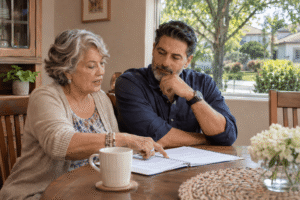
There is no set age when an older adult should stop driving. When to stop driving depends on whether they can still drive safely, not how old they are. Warning signs may include new dents or close calls, getting lost on familiar roads, slower reactions, confusion behind the wheel, or concerns raised by a doctor or friends. If you notice these changes, keep a record of what has happened and talk with your parent about safety rather than their age. Their doctor can help assess their driving ability. It also helps to discuss other ways they can get to appointments, run errands, and visit people without losing their independence.
At Angel’s Haven Care, we understand how difficult it can be for families to discuss driving with an aging parent. Knowing which warning signs to watch for, how to bring up the subject, and what transportation options are available can make the conversation easier. We also explain when a doctor or the DMV may need to get involved.
Signs an Older Driver May Not Be Safe
One mistake does not mean it is time to stop. Anyone can make a wrong turn on a bad day. What matters is a pattern, or a sign that is new for your parent. The National Institute on Aging describes warning signs that an elderly driver is unsafe, and the Alzheimer’s Association lists similar ones for people with memory loss. If you can, ride along as a passenger a few times and note what you see.
New Dents and Close Calls
The National Institute on Aging lists multiple crashes, near misses, or new dents or scrapes on the car among the warning signs. It also lists two or more traffic tickets or warnings in the last two years, rising insurance premiums because of driving issues, and neighbors or friends mentioning unsafe driving. Check the bumpers and garage walls, and ask about any damage kindly.
Getting Lost on Familiar Roads
The Alzheimer’s Association includes forgetting how to find familiar places, returning late from a routine drive, and forgetting the destination partway there. The National Institute on Aging adds taking a long time on simple errands without being able to explain why. These signs matter even if there has been no accident. Our guide to the signs your parent may need assisted living lists getting lost while driving to familiar places among the broader signs that daily life is becoming harder to manage alone.
Slow Reactions and Confusion
Other signs include slow or poor decisions in traffic, driving too fast or too slowly, sudden lane changes, hitting curbs, confusing the brake and gas pedals, and becoming angry or confused while driving. The National Institute on Aging’s guidance on driving and Alzheimer’s disease also lists changes in vision, hearing, or movement.
Why the Conversation Is So Hard
Driving Means Independence
For many older adults, the car is not just transportation. It is the grocery store on a whim, the coffee with friends, and proof that they are still in charge of their own life. Being asked to stop can feel like the first step toward losing control of everything else.
It is hard for you, too. You may worry about starting a fight or taking away something that makes your parent happy. Those feelings are normal. Your goal is not to take away their freedom. It is to protect them and others, and to keep their life as full as possible.
If your parent has dementia, there is another layer. The National Institute on Aging notes that people with dementia often do not recognize their own driving problems.
How to Start the Conversation
If you are wondering how to tell a parent to stop driving, a simple order works for most families:
- Write down what you have seen. Note dates and specifics, such as a scrape on the garage wall.
- Choose a calm, private moment when neither of you is rushed or upset.
- Talk about safety and skills, not age. Use “I” statements.
- Bring in the doctor so the concern comes from a neutral expert.
- Offer a plan for getting around, so stopping driving does not mean staying home.
Choose the Right Moment
The National Institute on Aging recommends going gradually: introduce the topic gently and revisit it over time. The Alzheimer’s Association suggests starting early, before driving becomes a problem, and expecting this to be the first of several conversations. Avoid raising it right after a scare, in front of relatives, or in the middle of a holiday dinner.
If you only see your parent a few times a year, a visit can be when you notice changes, including in the car. Our holiday visit checklist can help you know what to look for. You do not have to raise it that day. Make notes, then plan a calm conversation.
A gentle opener can be as simple as: “Mom, I have been thinking about how much you love being independent, and I want to make sure we keep it that way. Can we talk about the driving for a few minutes?”
Focus on Safety, Not Age
The National Institute on Aging advises avoiding confrontation, using “I” statements instead of “you” statements, and discussing the driver’s skills, not their age. It also suggests focusing on independence: explain that the goal is continued safety and continued activity, and offer to help your parent get around. AARP offers a free online seminar called We Need to Talk that helps families assess a loved one’s driving.
| Instead of this | Try this | Why it helps |
|---|---|---|
| “You’re too old to be driving.” | “I saw new scrapes on the car, and I’m worried about your safety.” | It talks about what you saw, not about age. |
| “You’re a danger on the road.” | “I would feel so much better if we looked at this together.” | It invites your parent to be part of the solution. |
| “I’m taking your keys.” | “Could we ask your doctor if your eyes or medicines affect driving?” | It hands the question to a neutral expert first. |
| “You can’t drive anymore, end of story.” | “Let’s plan how you’ll get to church and the market.” | It names what your parent fears losing and offers a plan. |
Expect some pushback and plan for it:
- “I’m fine.” Try: “I hope you are. Would you be willing to have a professional check, so we can both stop worrying?”
- “Then how am I supposed to get anywhere?” Try: “That is exactly what I want to solve with you. Let’s make a list of the places that matter most.”
If the conversation goes badly, stop and try again another day. The Alzheimer’s Association also reminds families not to blame themselves when a person with dementia resists, because the illness can affect insight and judgment.
Involve the Doctor
A doctor can often say what a family cannot. The National Institute on Aging says a doctor can recommend a driving assessment, advise changes to driving habits, or advise stopping altogether, and suggests asking whether any medicines could make driving unsafe. For people with Alzheimer’s disease, the Institute notes that a doctor can write “Do not drive” on a prescription pad, which you can show your parent later. The Alzheimer’s Association suggests that a family conference with the doctor may work better than trying to persuade a person alone.
You can also ask about a professional driving evaluation. The National Institute on Aging says the American Occupational Therapy Association keeps a national database of driving specialists, and the DMV or a health care provider can also recommend one. Assessments may have fees, so ask first. If your parent has dementia and refuses help of any kind, our guide on when a parent with dementia refuses help offers more ways to approach resistance.
Alternatives That Keep Your Parent Connected
Stopping driving does not have to mean staying home. The National Institute on Aging lists low-cost or free buses, taxis, rideshares, carpools, and volunteer driver programs, along with grocery, meal, and prescription delivery. It points families to the Eldercare Locator at 800-677-1116 for local Area Agency on Aging services, and to Rides in Sight at 855-607-4337 for transportation information. In Riverside County, the Office on Aging may also be able to point families to local options at (877) 932-4100.
Rides, Transit and Family Schedules
Start by listing the places that matter most to your parent: doctor visits, church, the hair salon, the pharmacy, a weekly lunch. Then match each one with a ride, so your parent can see that the trips they care about are covered. A shared calendar, with a name next to each ride and a backup option such as a rideshare or volunteer driver, keeps the plan from falling on one person.
If one sibling lives close and the others are far away, agree on what each person will do, whether that is driving, paying for rides, or handling phone calls. If you do not agree on how serious the problem is, our guide on when siblings disagree about a parent’s care can help you get everyone looking at the same information.
Transport Coordination in a Care Home
When a parent lives in a care home, the loss of the car can be easier to handle when someone else arranges the trips. Angel’s Haven Care lists transportation coordination for medical appointments among the services in its monthly rate. At our Temecula home, for example, our team manages transport coordination to appointments, including Temecula Valley Hospital, Loma Linda University Medical Center, and specialist offices.
That can ease a common worry after the keys are gone: how will Dad get to the cardiologist? When you tour any home, ask which appointments and destinations the team coordinates, how rides are arranged, whether there is a fee, and what happens with church, family visits, and outings. Please check with our team about what is available at the home you are considering. A care assessment is how a home learns what support your parent needs, and our guide to the care assessment process explains what to expect.
When a Doctor or the DMV Needs to Be Involved
If your parent keeps driving despite clear safety concerns, and talking has not worked, a doctor or the DMV may need to be involved. This is general information, not legal advice, and DMV steps can change, so check the current process before you submit anything.
According to the California DMV, family members, doctors, and others can submit a Request for Driver Reexamination (form DS 699), or write a letter to a local Driver Safety office. The request must be signed. You can ask that your name not be shared with the driver, and the DMV says confidentiality will be honored to the fullest extent possible. The DMV may then request medical information or require a reexamination, in person or by phone.
The DMV lists several possible outcomes: no action, medical probation, a follow-up reexamination, a restriction such as daylight driving only, suspension, or revocation. Doctors are also required to report Alzheimer’s disease and other conditions that, in their opinion, may affect a person’s ability to drive safely.
Dementia and driving. If your parent has dementia, the National Institute on Aging says that at some point it will no longer be safe to be behind the wheel, and that families should watch for warning signs because the person may not see the problem. Ask the doctor for guidance soon, and consider an objective driving evaluation. The Alzheimer’s Association suggests that, if a person refuses to stop, a respected authority figure or an attorney may help reinforce the message, and that as a last resort, families may take the keys, disable the car, or sell it, while arranging safe alternative transportation. If you are unsure about the legal side of taking away your parent’s car keys or selling a car they own, an elder law attorney can advise. If your parent is in immediate danger on the road, do not wait for another conversation, and call 911 in an emergency.
Common Questions Families Ask
What are the signs an elderly parent should stop driving?
Common signs include new dents or scrapes, near misses, getting lost on familiar routes, slow or poor decisions in traffic, confusing the pedals, tickets, and worry from others. A pattern matters more than a single mistake, and a doctor can help judge it.
How do I bring up driving without starting a fight?
Pick a calm, private moment, start with concern and not criticism, and talk about specific safety events instead of age. Use “I” statements, such as “I noticed new scrapes on the car, and I am worried.” Offer help getting around, and be ready to revisit the conversation more than once.
What if my parent has dementia and refuses to stop?
Ask the doctor to help, since a doctor can advise a person to stop driving and can write “Do not drive” on a prescription pad. Consider a professional driving evaluation. If safety is at risk, the DMV can review a driver’s qualifications on a family member’s request. Provide alternative transportation so the change does not mean losing access to what matters.
Can a doctor or the DMV step in?
Yes. Doctors can advise a patient to stop driving, and California doctors are required to report Alzheimer’s disease and other conditions that may affect safe driving. Family members can also ask the DMV to reexamine a driver, and can ask that their name not be shared. Check the DMV’s current steps before you submit a request.
How can my parent get around without a car?
Combine a few options: rides from family and friends on a shared calendar, taxis and rideshares, buses, volunteer driver programs, and delivery for groceries and prescriptions. The Eldercare Locator can connect you with local services at 800-677-1116. In a care home, ask what transportation the team coordinates.
If you are weighing what comes after the keys, we are glad to talk it through, with no pressure. Contact us or call (951) 900-4326, Monday through Sunday, 8am to 8pm, to ask about a free tour or care assessment.
Quick takeaway: Watch for patterns, talk about safety and not age, bring in the doctor, and offer a real plan for getting around.
This article is general information, not medical or legal advice. Driving rules and DMV steps can change, so confirm current details with the California DMV before you act. If someone is in immediate danger, call 911.