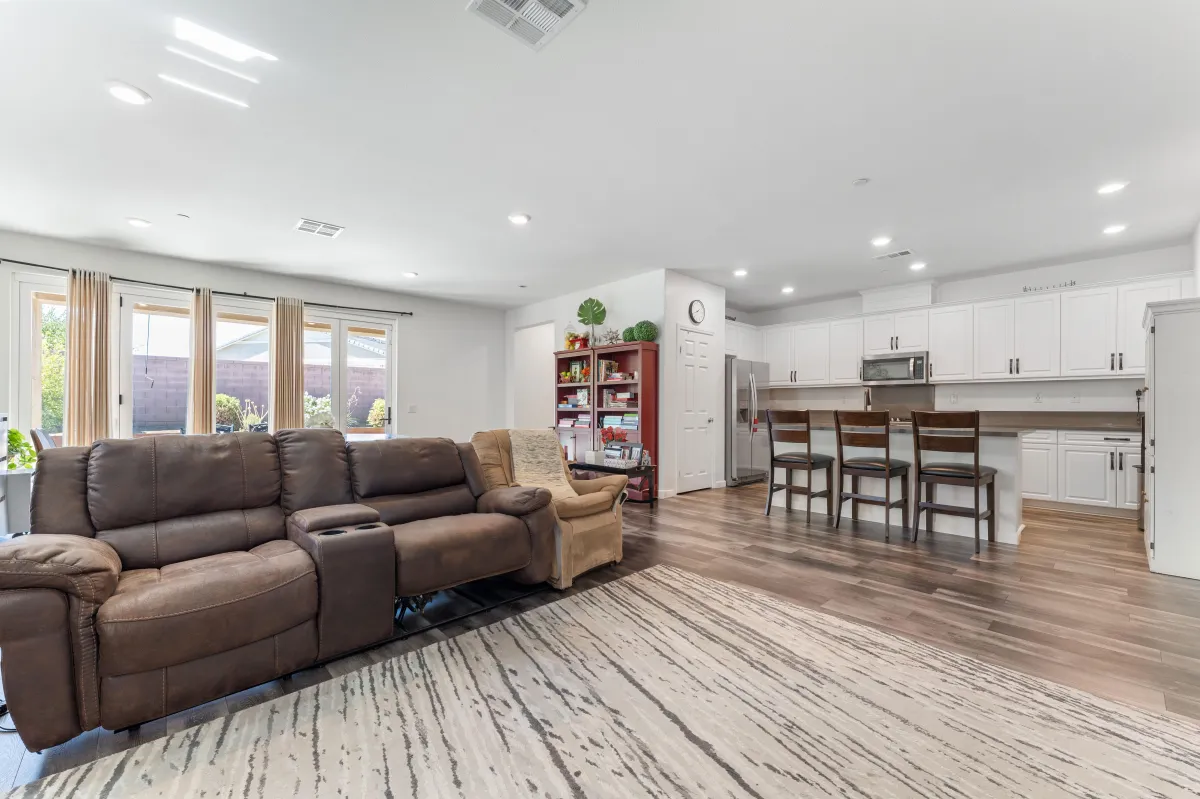

Summers in the Coachella Valley and the Inland Empire routinely push past 110 degrees, and desert cities like Rancho Mirage regularly see readings above 115 during peak heat waves. Families considering a board and care home for a parent often ask the same question during a tour: what actually happens here when it gets that hot outside?
It is a fair question, and it deserves a straight answer. Here is how heat season changes the daily routine inside our homes across Southern California, and why we treat it as a routine part of summer rather than a rare emergency. You can see all six of our locations on our home page.
The goal is for the day to feel ordinary even when the temperature outside is not.
Climate Control Is Not Optional
Reliable indoor cooling is a baseline requirement, not an amenity, in every home we operate. Staff monitor indoor temperatures in common areas and bedrooms during heat waves, not just once in the morning, and adjust as needed rather than waiting for a resident to say something feels off.
During an active Extreme Heat Warning, that monitoring becomes more frequent. If you are touring a community during heat season, it is reasonable to ask how a specific location handles temperature checks and what the plan is if a cooling system needs service on a 115-degree day.
Hydration Built Into the Daily Routine
Waiting for a resident to ask for water is not a reliable hydration strategy, especially for someone whose sense of thirst has diminished with age or who is living with cognitive decline. Fluids get offered on a schedule throughout the day during heat waves, not just at meals.
For residents who may not reliably report feeling thirsty or unwell, this matters more than it sounds. A structured hydration routine catches the problem before it becomes dehydration, rather than relying on a resident to notice something is wrong and say so.
Good to know: A structured hydration routine catches the problem before it becomes dehydration, rather than relying on a resident to notice something is wrong and say so.
Staff Who Actually Know Each Resident
Our homes are built around a caregiver-to-resident ratio of about 1 to 3, which is closer than what most larger assisted living communities can offer. That ratio matters most during a heat wave, because staff who see the same small group of residents every day notice subtle changes fast. A resident who is a little quieter than usual, a little more confused, or skipping a meal stands out immediately in a small home in a way it might not in a larger community.
This is also where dementia-aware training matters. California has expanded its requirements for how direct care staff respond to residents showing signs of distress, and heat is one of the more common triggers for confusion or agitation in residents living with dementia.
Adjusting the Daily Schedule During Heat Warnings
Outdoor time gets moved indoors or shifted to the cooler morning hours during an active heat warning. Activities that would normally happen on a patio or in a garden area get rescheduled rather than skipped altogether, so residents still get engagement and movement without the heat exposure.
Tracking Individual Risk Factors, Not Just the Thermometer
Two residents can experience the same 115-degree day very differently depending on their medications, their mobility, and their existing health conditions. A resident on a diuretic or a heart medication carries more heat risk than a resident without one, even sitting in the exact same room. Care plans reflect this, so staff know which residents need closer attention the moment a heat warning is issued, rather than treating every resident identically.
This kind of individualized awareness is part of why we keep our homes small rather than expanding to a model where residents are grouped and monitored in larger, less personal batches. It is much easier to remember that a specific resident needs an extra hydration check at 2 p.m. when there are a handful of residents to track rather than dozens.
What a Heat-Wave Day Actually Looks Like Inside Our Homes
In practice, an active heat warning changes the rhythm of the day more than it changes the destination. Morning activities that would normally happen outside shift earlier or move indoors. Fluid offerings increase in frequency rather than staying tied strictly to mealtimes. Staff pay closer attention to residents who tend to under-report how they are feeling, since those are the residents most likely to have a problem go unnoticed in a less attentive setting.
None of this requires a special announcement to residents or a disruption to the sense of normal routine that matters so much for comfort and, for residents living with dementia, for reducing agitation. The goal is for the day to feel ordinary even when the temperature outside is not.
What Happens If the Power Goes Out
Every location has an emergency preparedness plan that covers what happens if the power goes out during extreme heat, including how residents stay cool and how families get updated. Because the specifics vary by location and by the nature of the outage, we would rather walk you through the actual plan for the home you are considering than make a blanket claim here. Ask us directly during a tour and we will show you.
Power outages tend to spike during monsoon season alongside the heat, which we cover in more detail in our guide to monsoon season safety planning in the Coachella Valley.
Common Questions Families Ask
What temperature triggers extra precautions in your homes?
We do not wait for an official warning to start paying closer attention. Once desert temperatures move into the triple digits, hydration checks and temperature monitoring increase as a matter of routine, and they increase further once the National Weather Service issues an Extreme Heat Warning.
Bottom Line
We treat triple-digit heat as a routine part of summer, not an emergency waiting to happen.
Do your homes have a plan if the electricity goes out during a heat wave?
Yes, every location has an emergency preparedness plan. Because the details differ by home, we recommend asking us to walk through the specific plan for the location you are touring.
Does the daily schedule change a lot during a heat warning?
The rhythm of the day shifts, mostly by moving outdoor time earlier or indoors and increasing hydration checks, but we try to keep the overall routine feeling as normal and familiar to residents as possible.
Can families visit during a heat wave to see how a home is managing it?
Yes. Tours are welcome year-round, including during heat season, and seeing the routine firsthand is often more useful than reading about it.
Do all residents get the same level of heat precaution, or does it vary?
It varies. Residents on certain medications or with certain health conditions carry more heat risk than others, so care plans reflect who needs closer attention once temperatures climb, rather than applying one blanket approach to everyone.
If you would like to see how a specific location handles heat season, reach out through our Contact Us page or call (951) 900-4326. We are available Monday through Sunday, 8:00 AM to 8:00 PM, and happy to schedule a tour.
See How We Handle Heat Season Firsthand
Quick takeaway: managing a 115-degree heat wave comes down to a few unglamorous basics done consistently: reliable cooling, scheduled hydration, staff who notice small changes, and a plan for the worst case.
Schedule a Tour →