
Industry executives and trade press have been describing a real shift in interest toward small-home senior care in 2026, and it isn't happening in a vacuum.
This small care homes vs. big facilities 2026 trend is being driven by three specific industry pressures, staffing shortages, rising costs, and tightening regulation, that are reshaping what families weigh when comparing a large community against a smaller home. This guide walks through each pressure honestly, including where the small-home model genuinely holds up better and where the comparison is more nuanced than a simple "small is better" story.
For a closer look at our own approach, visit our Why Us page.
Three 2026 Industry Pressures Reshaping the Decision
Staffing Shortages
There is a well-documented, ongoing shortage of certified nursing assistants and home health aides nationally, and the U.S. Bureau of Labor Statistics projects demand for home health and personal care aides to grow 22% between 2022 and 2032, far faster than the average occupation. This affects every senior care provider, regardless of size, but the math looks different depending on scale. A six-resident home needs two or three caregivers on a given shift to maintain a 1:3 ratio, a staffing target that's straightforward to plan around and immediately obvious to families if it isn't being met. A large community maintaining a stated ratio across dozens or hundreds of residents has to hire and retain a much larger total staff pool, and a shortfall can be spread thin across a building in ways that are harder for any single family to see or verify from a tour alone.
Rising Costs
Senior care costs have been climbing faster than general inflation for several years, with assisted living rents growing roughly 4.4% in 2025 and 2026 projections in the 4% to 7% range according to NIC MAP. Where this connects to the size-of-home decision is less about which model costs less overall and more about pricing predictability. Many large operators use tiered, a-la-carte pricing, where a lower-looking base rent is paired with separate, sometimes fast-rising care-service fees. All-inclusive models don't have that same separate fee structure to reprice, which means a rate increase, when it happens, is a single transparent number rather than a base rate plus a shifting set of add-ons a family has to track.
Tighter Regulation
State-level regulation of assisted living has tightened noticeably. According to the American Health Care Association and National Center for Assisted Living's 2026 regulatory review, direct care staff education and training requirements changed in 10 states in the past year, administrator and director training requirements changed in nine states, and staff scheduling requirements changed in seven states. Maryland alone finalized a major regulatory overhaul, years in development, with most provisions effective in 2025 and additional manager licensure requirements, including a four-year degree and two years of relevant experience, phasing in by mid-2026.
Worth being accurate about: This is a genuine industry-wide trend, but it doesn't inherently favor small homes over large ones. In California specifically, homes of any size operating as Residential Care Facilities for the Elderly are already licensed under the same California Department of Social Services Community Care Licensing framework, so a small home isn't catching up to a standard large facilities already met. Both are held to the same underlying regulatory floor.
Why Small Homes Are Proving More Resilient
Putting these three pressures together, the honest case for small homes isn't that regulation favors them or that they're automatically cheaper. It's that two specific structural features hold up well under current conditions: a staffing model that's easier to keep consistent at a small scale, and a pricing model that doesn't have a separate fee structure to reprice unpredictably. Neither of these is a regulatory advantage or a guarantee. They're structural characteristics of the model that happen to line up well with what 2026's specific pressures are testing.
Industry coverage backs up the broader interest this creates. Senior Housing News reported in 2026 that small-home operators are seeing sustained growth in family interest, describing a post-pandemic "visceral preference" for lower-density, home-like environments that one small-home operator characterized as part of a broader anti-institutional shift in how families think about senior care.
The honest case for small homes isn't that regulation favors them or that they're automatically cheaper. It's two specific structural features that hold up well under current conditions.
What Families Say After Comparing Both
Among our own reviewers, a recurring theme is families who toured several large facilities first and found the experience impersonal before choosing a smaller home. Several of our reviews come from families who explicitly describe touring three or four large communities before finding a smaller home model that felt different, and from professionals, including a nurse and a social worker who have toured many facilities professionally, independently describing a noticeable difference in the caregiver-to-resident ratio and day-to-day attentiveness. Our Reviews page has the full, attributed set if you want to read them directly rather than take a summary at face value.
How to See the Difference for Yourself
The most reliable way to evaluate this comparison isn't reading about it, it's touring both kinds of settings with the same specific questions in hand.
- Ask for the actual caregiver-to-resident ratio at the time of your visit, not just the advertised target, and ask how it changes on nights and weekends.
- Ask whether the quoted price is all-inclusive or a base rate with separate fees, and get the full list of what could be billed separately as care needs change.
- Ask how long current staff have worked there, since turnover affects how well caregivers actually know residents' routines and needs.
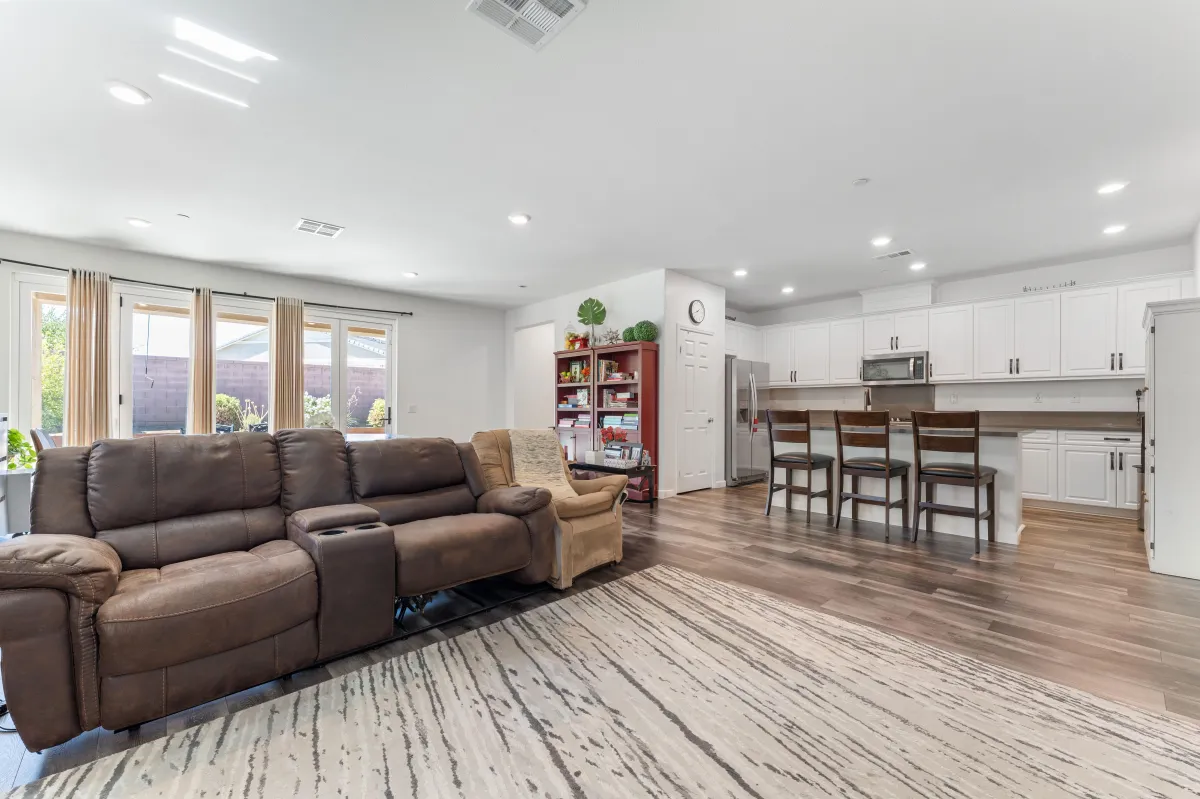
- Notice the physical environment itself: a large facility's common areas and a small home's kitchen and living room say something real about the day-to-day experience, not just the marketing.
- Read reviews from both types of providers you're considering, and weigh independent, professional-context reviewers (nurses, social workers, other clinicians) alongside family reviews.
Our Home page and Why Us page both go into more detail on how our own model is structured, if a small home is one of the options you're weighing.
Common Questions Families Ask
Is this trend specific to California or happening nationally?
It's a national pattern. Industry trade press has covered growing interest in small-home senior living models across the country in 2026, driven by the staffing, cost, and regulatory pressures described above, none of which are unique to any one state. California's specific regulatory framework, licensing all RCFEs under the same Community Care Licensing Division regardless of size, adds a state-specific detail, but the underlying interest in smaller, more personal care settings is being reported nationally, not just locally.
Are small homes held to the same regulatory standard as large facilities?
In California, yes. Residential Care Facilities for the Elderly of any size, from a six-resident home to a much larger community, are licensed under the same California Department of Social Services Community Care Licensing Division framework, with the same core requirements around background checks, staff training, health and safety standards, and inspections. A small home isn't operating under a lighter-touch or exempt category. It's held to the same regulatory floor as a large facility, just at a different scale.
Do small homes cost more or less on average?
It varies, but national data suggests board and care homes often run somewhat lower on average than larger assisted living communities. A Place for Mom's 2026 cost report found a national median monthly cost of $4,500 for care homes compared to $5,419 for assisted living communities, though local market conditions, room type, and level of care all affect where any specific home or community actually falls within that range. The more useful comparison for your own budget is the total, all-in monthly cost for the specific options you're considering, not a national average.
How can I compare both types before deciding?
Tour both, ask the same specific questions at each (actual current ratio, all-inclusive vs. tiered pricing, staff tenure), and read reviews from each provider, weighing professional-context reviewers alongside family reviews where available. If you'd like to talk through how a small-home model specifically compares to what you've seen so far, our team is glad to walk through it directly and honestly, including if a large community turns out to be the better fit for your family's situation.
Weighing Small vs. Large?
Quick takeaway: staffing and pricing predictability hold up well at small scale, but regulation applies to both models equally. We'll walk you through the honest comparison, including if a large community turns out to be the better fit.
Talk to Our Team →