If you've toured even one or two places already, you've probably noticed how different two "assisted living" providers can be from each other, even when they're licensed for the same kind of care.
Some house six residents in a converted house on a quiet street. Others house 50 to 200 residents across a campus with a lobby, a dining hall, and a nursing station. Both are real, legitimate models. This guide lays out the actual differences, so you can compare with clear eyes instead of guessing from a brochure. You can also get a feel for what the small-home model looks like in practice by visiting the Angel's Haven Care homepage, which walks through the philosophy behind keeping every home to just six residents.
A bigger campus is often assumed to mean better resourced care. In practice, size and staffing ratio are two separate things, and staffing ratio is what determines how much individual attention a resident actually receives.
Staffing Ratios: 1:3 vs Industry Average 1:14
This is the single number that tends to matter most once a family actually moves in. Small residential care homes, like Angel's Haven Care, are capped at six residents under California law and typically staff at a 1:3 caregiver-to-resident ratio. Large assisted living facilities, by contrast, average closer to 1:14.
Caregiver-to-Resident Ratio
e.g. Angel's Haven Care 1:3
Industry average 1:14
That gap isn't abstract. With a 1:3 ratio, help tends to arrive in seconds. In large facilities, families report call buttons going unanswered for 20 minutes or more, especially overnight. Staff consistency compounds this difference: small homes typically keep the same two or three caregivers working daily, while large facilities rotate staff through shifts. For a resident with dementia in particular, that consistency isn't just a comfort. Recognizing a familiar caregiver's face and voice can meaningfully reduce confusion and agitation.
A Realistic Example
Picture a resident who gets up at 2am and needs help getting to the bathroom safely. In a home with a 1:3 ratio and an awake overnight caregiver, that caregiver is typically nearby and available within moments. In a large facility where one overnight caregiver may be responsible for a dozen or more residents spread across a wing, that same resident may be waiting, and waiting is exactly when falls happen.
Environment: A Real Home vs an Institutional Wing
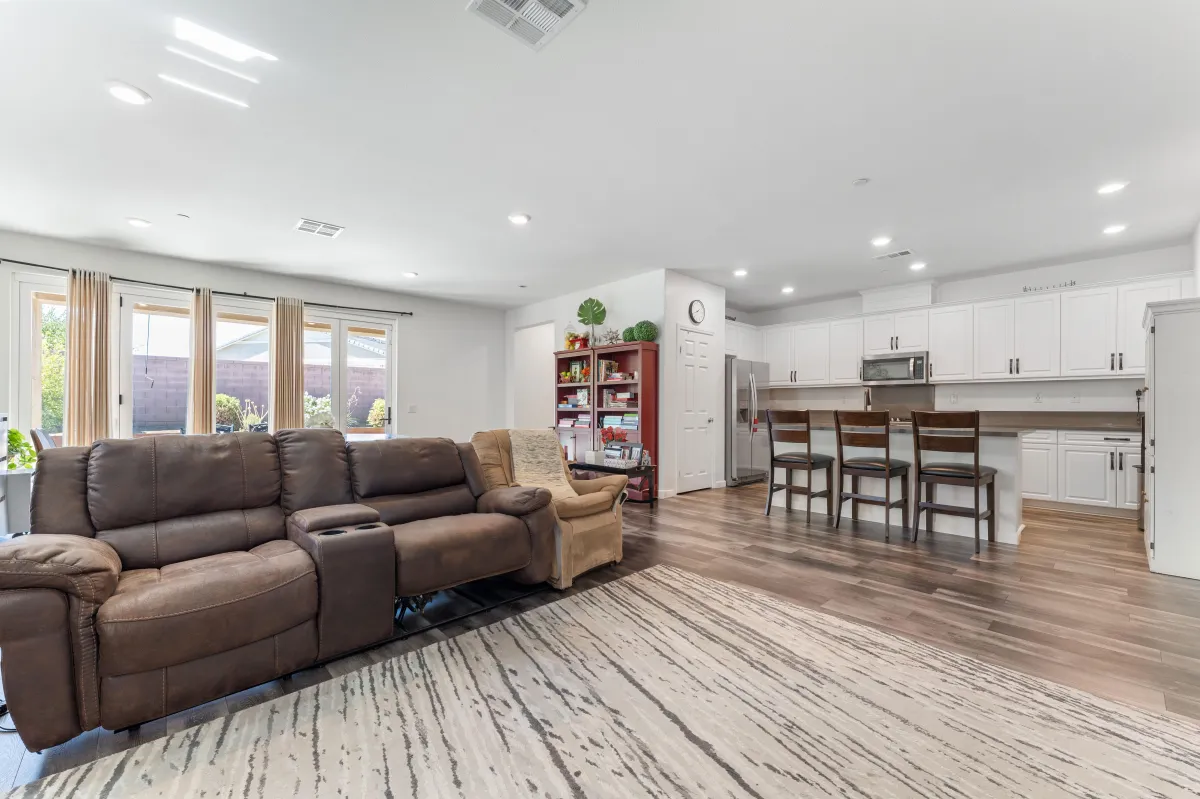
The physical environment shapes daily life more than most families expect before they've toured both models. A small residential care home has no lobby and no nursing station. Instead, there's a kitchen, a living room, a backyard, and bedrooms, the same rooms any family lives in. Large facilities are generally built around long corridors, shared common areas, and a more clinical layout designed to serve dozens of residents at once.
Good to know: Visiting hours are another practical difference worth asking about directly. Many large facilities operate on set visiting windows. Small homes more often describe an open-door policy, with no fixed visiting hours at all.
Why This Gets Overlooked
Families touring in person often get drawn to visible amenities, a large dining hall, a pool, a full activities calendar, without asking how those amenities translate into daily attention for their specific loved one. A beautiful common area doesn't tell you how quickly help arrives at 2am, or whether the caregiver on duty actually knows your parent's name.
A Common Misconception
A bigger campus is often assumed to mean better resourced care. In practice, size and staffing ratio are two separate things, and staffing ratio is what determines how much individual attention a resident actually receives. A facility can have impressive buildings and grounds while still operating at a 1:14 ratio behind the scenes.
Cost Comparison
Large facilities often advertise a lower base rate than small residential homes. The comparison gets more complicated once add-ons are factored in. Memory care surcharges, medication management fees, and incontinence care fees are common at large facilities, and once they're added up, the true monthly cost frequently lands at $6,500 to $8,500 per month in Southern California, often higher than what a small home charges for the same level of care.
Angel's Haven Care is often $1,000 to $2,000 per month less than comparable memory care at a large facility, once all the true costs are counted, with no hidden fees or surprise upcharges. You can see the full pricing breakdown and what's included on our Why Us page.
Which Model Fits Your Family
Neither model is universally better. A large facility can make sense for a resident who is largely independent, socially active, and wants access to a bigger campus with a wide activities calendar and a built-in continuum of care as needs change over time.
A small residential care home tends to make more sense for a resident who needs closer supervision, has dementia or another condition where consistency and low staff turnover genuinely affect wellbeing, or whose family values a quieter, more home-like daily environment over a larger campus with more amenities. The honest answer depends less on which model sounds better on paper and more on what your specific loved one needs day to day.
Common Questions Families Ask
What's the single biggest difference in Small Care Home vs Large Assisted Living Facility?
Staffing ratio and consistency. A 1:3 ratio with the same caregivers daily versus a 1:14 average with rotating shifts affects nearly everything else, from response times to how well caregivers know a resident's routines and preferences.
Which option typically costs less?
It depends on what's actually included. Large facilities often advertise lower base rates, but once memory care, medication management, and other add-on fees are factored in, small residential homes are frequently the same price or less for a comparable level of care.
How do I know which is right for my loved one?
Start with your loved one's specific needs rather than the size of the building. Consider how much supervision they need, whether staff consistency matters for their condition, and whether they'd be more comfortable in a home-like setting or a larger campus with more social activity. A free care assessment can help you think through this honestly.
What should I do next after reading about Small Care Home vs Large Assisted Living Facility?
Tour at least one of each model before deciding. Bring the same questions to both, and pay attention to staffing ratio, consistency, and how included pricing actually is. When you're ready to see a small residential care home in person, reach out through our Contact Us page or call (951) 900-4326, Monday through Sunday, 8am to 8pm, to schedule a free tour.
Ready to See Which Model Fits Your Family?
Schedule a free care assessment and tour a small residential home in person, no obligation, nothing hidden.
Schedule a Free Tour →